
Chinese Food Differences: Northern vs. Southern Staples
Chinese food differences truly show how climate and history shape delicious culinary traditions across China’s north and south. Geography profoundly shapes what people eat. This article explores the fundamental divergence between staples in Northern and Southern China. We will see how wheat dominates the North, while rice reigns supreme in the South. This difference creates a delicious and fascinating distinction in the country’s food culture.
The Geographical Divide: Chinese Food Differences
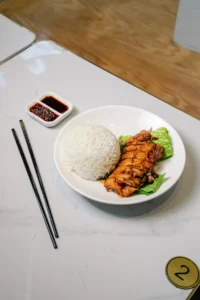 Climate and geography dictate agricultural traditions. Northern China features a colder, drier climate. This environment favours the cultivation of wheat. Furthermore, the fertile soil is suitable for this resilient crop. Consequently, northern diets rely heavily on wheat-based foods.
Conversely, Southern China boasts a warmer, wetter climate. This environment is ideal for growing rice. The abundant rainfall and extensive paddy fields encourage this staple. Therefore, southern cuisine centres around rice and its derivatives. These distinct agricultural practices ultimately forge two separate food identities.
Northern Comfort: The World of Wheat
The North Chinese diet is a celebration of wheat’s versatility. People transform wheat flour into an astonishing array of satisfying foods. Significantly, noodles are a cornerstone of every meal. They vary wildly in shape, size, and thickness. For instance, thin lamian (hand-pulled noodles) are common. People also enjoy thick, broad biangbiang noodles.
Dumplings and Buns: Northern Delights
In addition to noodles, Northern cuisine features other iconic wheat products. Dumplings, known as jiaozi, are hugely popular. Families typically steam or boil them. They are often eaten during the Chinese New Year. Moreover, mantou (steamed buns) and baozi (filled steamed buns) are essential. These fluffy, substantial items serve as bread replacements. Ultimately, these wheat staples provide the carbohydrate foundation for northern meals. They are often served with strong, salty sauces or braised meats.
Southern Sustenance: The Reign of Rice
Moving south, rice takes centre stage on the dining table. In fact, the word for “meal” often translates to “eat rice”. This highlights its central importance. People consume steamed white rice at almost every meal. It acts as a neutral base for rich, complexly flavoured dishes.
Rice Noodles and Congee: Southern Variety
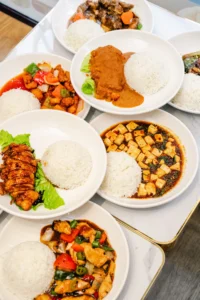 Nonetheless, the South offers variety beyond steamed rice. Rice noodles are a delicious and popular alternative. For example, Guilin mifen or Hefen are widely consumed. These noodles provide a lighter texture than their wheat counterparts. Furthermore, congee (a rice porridge) is a comfort food staple. People eat it for breakfast or when they feel unwell. Consequently, the texture of southern food is often softer and the flavours are lighter than in the North. Overall, rice provides the perfect counterpoint to the South’s fresh, delicate ingredients.
A Tale of Two Kitchens and Chinese Food Differences
In conclusion, the difference between Northern and Southern staples is stark. The North champions wheat, turning it into hearty, chewy items. The South embraces rice, using it as a versatile, elegant foundation. This divergence reflects a history rooted in agricultural possibility. Therefore, a trip through China’s kitchens offers a truly dual culinary experience. Ultimately, both regions create spectacular food from their respective, dominant grain. This regional diversity makes Chinese food a world treasure.