
Asian Food Traditions For Lunar New Year
Asian food traditions shine brightly as Lunar New Year marks a massive celebration across the vast continent. This festival welcomes spring with joy and excitement. Billions of people honour their ancestors and deities during this time. Families gather for heartfelt reunions. Delicious food sits at the very heart of these events. These dishes carry deep symbolic meanings for diners. They pass vital traditions to the next generation. Let’s explore these tasty customs across the continent.
China
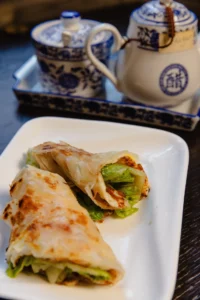
Cities in China quieten down as people travel home. Families hold grand feasts on New Year’s Eve. They serve steamed fish to symbolise abundance. The Mandarin word for fish sounds like ‘surplus’. Consequently, diners leave leftovers to ensure future wealth. Long noodles represent a strong wish for longevity. Chefs keep them uncut to preserve this meaning. Additionally, dumplings resemble ancient silver ingots. Eating them invites prosperity into the home. Sweet glutinous rice cakes also appear as popular gifts.
Taiwan’s Asian Food Traditions
Taiwan shares many traditions with China. However, local culture heavily influences the menu. Families enjoy braised pig knuckles with noodles. They also savour steamed grouper during the meal. Round tables often feature hot pots symbolising reunion. One famous dish involves squid, scallops, and bamboo shoots. Locals also love pineapple cakes. The word for pineapple sounds like ‘fortune comes’. Therefore, this fruit brings luck to the household.
Vietnam
Vietnam calls this holiday Tết. It celebrates the country’s deep agrarian culture. A five-fruit platter acts as the table’s centrepiece. This vibrant display symbolises a prosperous year. Cooks prepare savoury glutinous rice cakes called Bánh chưng. They wrap these square cakes in leaves. Central Vietnam prefers a cylindrical version called Bánh tét. Families also share braised pork with eggs. Furthermore, meat jelly represents strong family bonds.
Asian Food Traditions In The Koreas
North and South Korea call the holiday Seollal. Festivities typically last three days. Both nations share several key dishes. Everyone eats a rice cake soup called tteokguk. Eating a bowl marks turning a year older. North Koreans also enjoy cocoon-shaped rice cakes. Elders receive glutinous rice cakes as a sign of respect. South Koreans often enjoy spicy flavours. In contrast, North Korean dishes remain milder.
Singapore
Similarly, fish plays a vital role in Singapore. For example, locals love a raw fish salad called yu sheng. During this ritual, diners toss the ingredients high into the air. They loudly shout wishes for good fortune while mixing. Overall, Singapore blends cultures beautifully. You might, therefore, find Indian-style chicken curry on the table. Additionally, beef rendang adds rich flavour to the feast. Lastly, a layered pot dish called pen cai features seafood and meat.
Malaysia
Malaysia celebrates with open house dinners. As a result, friends and strangers join the fun. Notably, Yu sheng salads appear here as well. However, Malaysians often debate Singaporeans about the dish’s origins. Furthermore, braised mixed vegetables represent a bountiful harvest. This dish typically includes mushrooms and dried beancurd. To finish, sweet treats usually end the meal. For instance, locals love a dessert soup called bubur cha cha. Moreover, pineapple tarts remain a festive staple.
Philippines’ Asian Food Traditions
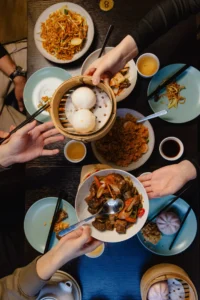 Filipinos celebrate this season for two weeks. They enjoy sticky rice cakes called tikoy. However, distinct local dishes also feature prominently. People devour lumpiang Shanghai. These skinny spring rolls contain pork or beef. Long noodles called pancit represent long life. A sponge cake called mamon offers a sweet bite. Soy bean pudding with syrup provides comfort.
Mongolia
Mongolians specifically call their festival Tsagaan Sar. Interestingly, this name translates to ‘White Moon’. Fittingly, dairy products dominate the festive menu. These white foods symbolise purity and goodness. To start, guests eat a white dessert made with curd and rice. Additionally, families drink salty milk tea together. Later, huge feasts include steamed mutton dumplings. Uniquely, bakers stack shoe sole cakes like a mountain. Finally, sugar cubes top this impressive display.
Indonesia’s Asian Food Traditions
Indonesia formally calls the holiday Imlek. Here, Chinese dishes mix with local flavours. Naturally, people eat longevity noodles. Additionally, tea eggs offer a unique savoury taste. Specifically, cooks boil eggs in tea and soy sauce. Visually, a layered cake called lapis legit looks beautiful. It also possesses a firm texture. Furthermore, rice cakes here use pandan and durian. Consequently, these ingredients create a distinct local taste.
Conclusion
Food unites diverse cultures during the Lunar New Year. Each nation adds unique local flavours to shared traditions. These distinct dishes honour ancient heritage and strong family bonds. We clearly see how geography and history shape every festive plate. Ultimately, these meals bring hope for a prosperous future. They remind us that shared joy transcends borders.